Boom side swing (also known as boom offset) is a core special configuration of small excavators. It means that the boom can swing horizontally left and right, and the arm and bucket move offset with it, eliminating the need for frequent movement and rotation of the entire machine. It is suitable for 1–4 ton mini excavators and small excavators, with an offset range usually 400–800mm left and right. Its core advantage is the adaptability to narrow spaces and edge-attached operations.
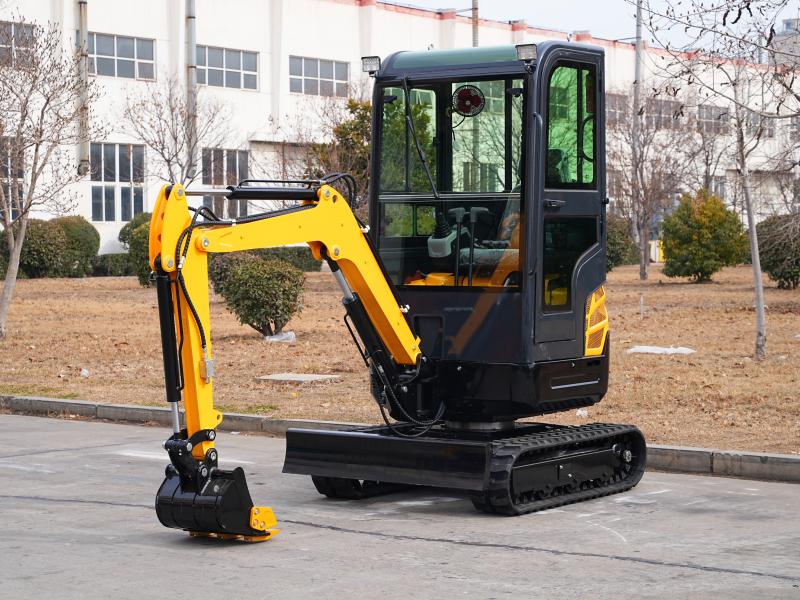
Its main application scenarios focus on fine edge-attached operations: when excavating municipal trenches and pipelines, it can work close to walls and curbstones to avoid damaging the road surface and surrounding facilities; in house foundation, indoor demolition and courtyard construction, it can work accurately against the wall, adapting to narrow areas such as basements and wall corners; it can also be used for landscaping trimming, river dredging, and highway shoulder trimming.
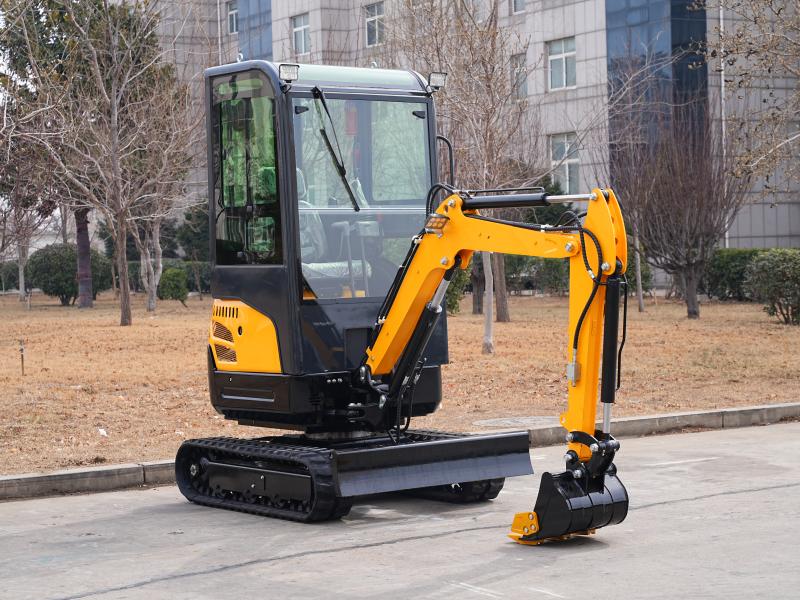
Compared with ordinary small excavators, it is more flexible in operation and higher in precision, reducing manual secondary trimming, lowering the collision loss of surrounding facilities, improving construction efficiency, and is suitable for scenarios such as municipal administration, landscaping, and rural infrastructure. Its limitations lie in its complex structure, relatively high cost, slightly cumbersome maintenance, weak stability during side swing operation, limited heavy-load excavation, and it mainly focuses on fine and edge-attached small-scale earthwork operations.